
What Nobody Tells You Before You Start a Kitchen Remodel
Apr 17, 2026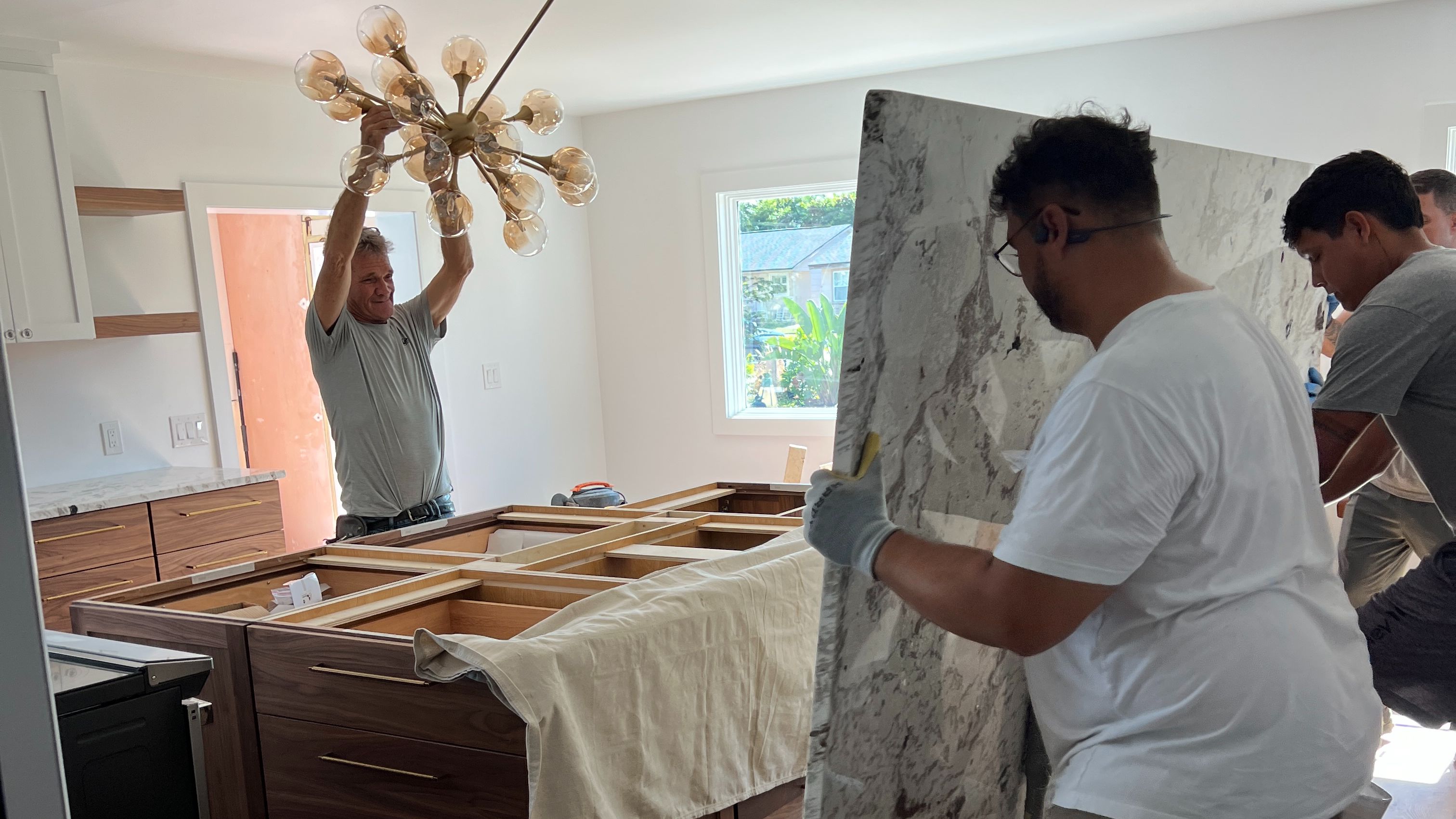
What Nobody Tells You Before You Start a Kitchen Remodel
The decisions, the delays, the disappointments — and how to survive all of it with your budget (and sanity) mostly intact.
Everyone shows you the before and the after. The crumbling old cabinets, then the gleaming reveal. What they skip — what nobody posts on Instagram — is everything in between. The decision fatigue. The contractor who vanishes mid-install. The moment you realize the vaulted ceiling you dreamed about isn't happening. Ever.
I've been through it. And I want to walk you through what we did, why we did it, and — most importantly — what I wish someone had told me before we started swinging hammers.
The before: seeing the vision when nobody else could
The kitchen I bought was rough. Tight clearances, dead zones in the layout, storage that was either too deep to use or too shallow to matter. A fluorescent panel light hanging from the ceiling like a hazard. Finishes that hadn't been updated in decades.
But I could see what it could be. I dreamed big — knock a wall down, open the ceiling, six months tops. Easy.
What nobody tells you: Building in a new state means new rules. Different materials, hurricane codes, truss roofing instead of traditional gable framing, plumbing trapped in concrete slab. The dream collides hard with engineers, inspectors, permit offices, and budget reality. Have a clear vision — and a healthy dose of patience.
I hadn't done my homework on building codes, especially the stricter enforcement that came after hurricane seasons. Hiring the wrong contractors early cost us months. Write down your plan. Then stick to it.
The plan: more decisions than you ever imagined
Before a single cabinet goes in, you're actually deciding how you cook, how you move through your kitchen, and how you store everything you own. Layout. Sink placement. Appliance choices. Cabinet depth. Flooring grain direction. Handle placement. Grout color and thickness. Switch locations. Paint sheen. Dimmer type. Subfloor prep.
And that's before you've agonized over the backsplash.
What nobody tells you: You don't just "pick cabinets and some finishes" and you're done. There are hundreds of decisions nested inside the obvious ones — and the deeper you get, the more tired you are when you have to make them. Do as much deciding upfront as you possibly can.
Start with the building department — it's free, open to the public, and will tell you what's actually possible in your house. Tour showrooms. Watch videos. Get multiple estimates. Ideas and constraints surface during those conversations that you'll never find online.
The order of operations: get this wrong and weeks disappear
This is the part that derails most renovations. The sequence matters more than almost anything else.
- Demo — and find out what's actually inside your walls
- Framing adjustments (if any)
- Electrical and plumbing rough-in — all decisions finalized before drywall
- Inspections
- Venting
- Drywall
- Flooring (LVP goes in after cabinets for easier future replacement)
- Cabinets installed
- Countertops templated, fabricated, then installed
- Backsplash
- Fixtures and trim-out
- Hood and finishing details
Cabinets and appliances run 10–12 weeks standard. If either is delayed, everything else stops. You cannot template countertops until cabinets are installed — so even if your slabs have been sitting in a warehouse for months, you're still waiting. The whole project orbits those two lead times.
Order early. Get fixtures on-site. Unbox and inspect immediately — damage discovered on installation day adds weeks. Fixtures don't spoil.
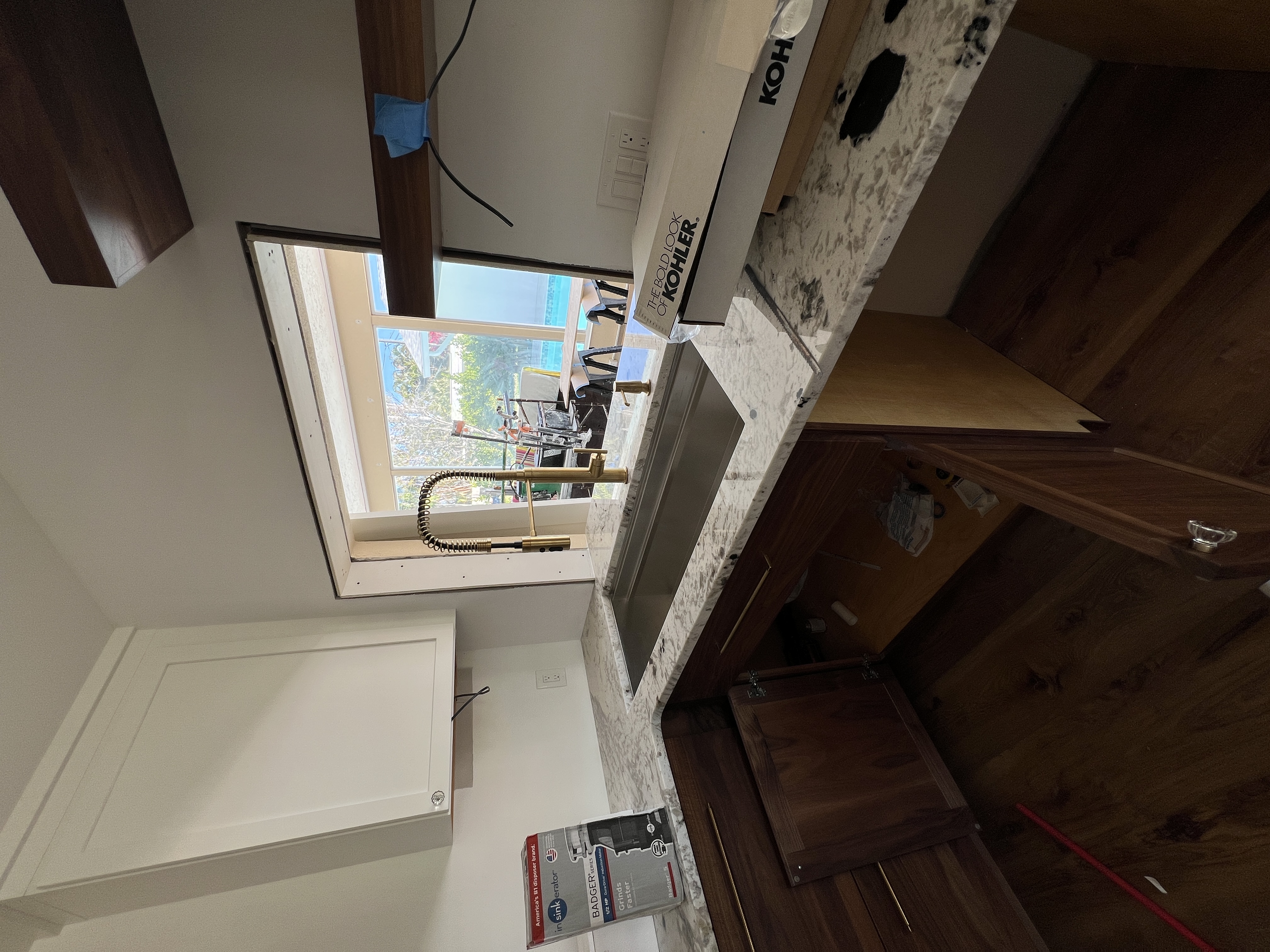
What nobody tells you: The "extras" are where budgets quietly collapse. Pendant lights at $400–$1,000 each. Handles at $10–$120 a piece, multiplied by 35 pulls. Recessed lights at $100 each, plus install. Backsplash tile. Faucets. It adds up faster than any estimate prepares you for. Always ask for a total for your allowances — in writing.
The chaos phase: the part nobody posts
There is a period — sometimes weeks, sometimes months — where the kitchen is a war zone and you genuinely cannot picture ever cooking in it again. Trades overlap or don't show. Permits get missed. Parts arrive damaged. Contractors ghost you mid-install.
This is where bad decisions happen. You're exhausted, over budget, and you just want it done. That's exactly when to slow down.
What nobody tells you: Nobody is as invested in your home as you are. Check progress regularly. Catch mistakes early — take photos and video daily if you can. Those pictures will also tell you where pipes and wires are buried when you need to know five years from now.
Don't be afraid to pause work to get organized. Just don't pause for long — momentum matters, and "has to be done" tends to fit their schedule more than yours.
 The finish line (which is not actually a line)
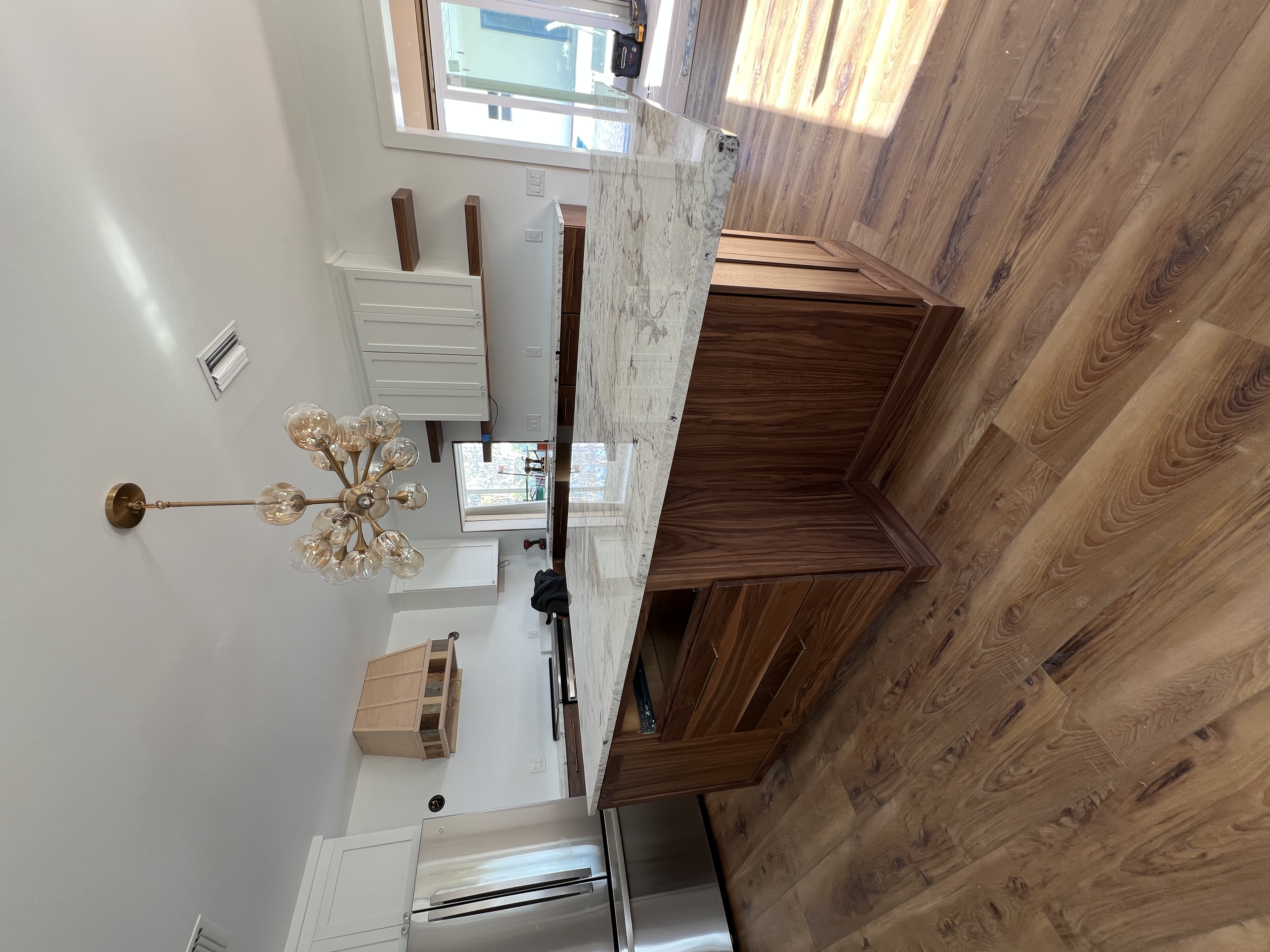
The finish line is a neighborhood, not a stripe you cross. As you approach it, there's always something: a damaged piece that needs replacing, a scuffed surface, a detail still outstanding, a part on backorder. That is normal. It is not failure.
You will regret something. You'll catch a detail too late, miss a touch-up, second-guess a choice at 11pm. Move on. There's always the next renovation.
The big takeaways
- Know your budget — and what's actually in it. Ask for allowance totals in writing before work starts.
- Do your homework before you start, not during. Visit the building department, tour showrooms, get multiple estimates.
- Protect the order of operations. Cabinets and appliances drive your entire timeline — treat their lead times as sacred.
- Make decisions early and follow through. Decision fatigue is real. Future you will thank present you for deciding now.
- You're the boss. Don't accept whatever fixture or finish is "specified" if you can choose better. It's your house.
If you're building or remodeling and want help thinking through your layout or lighting plan — that's exactly what I do. Reach out for more info about private consultations@ hello@mydesignsherpa.com.
Get my FREE Kitchen Inventory Checklist

